Showing posts with label Visual Language. Show all posts

Wednesday, 19 March 2014

Sketchbook- Fun drawings.

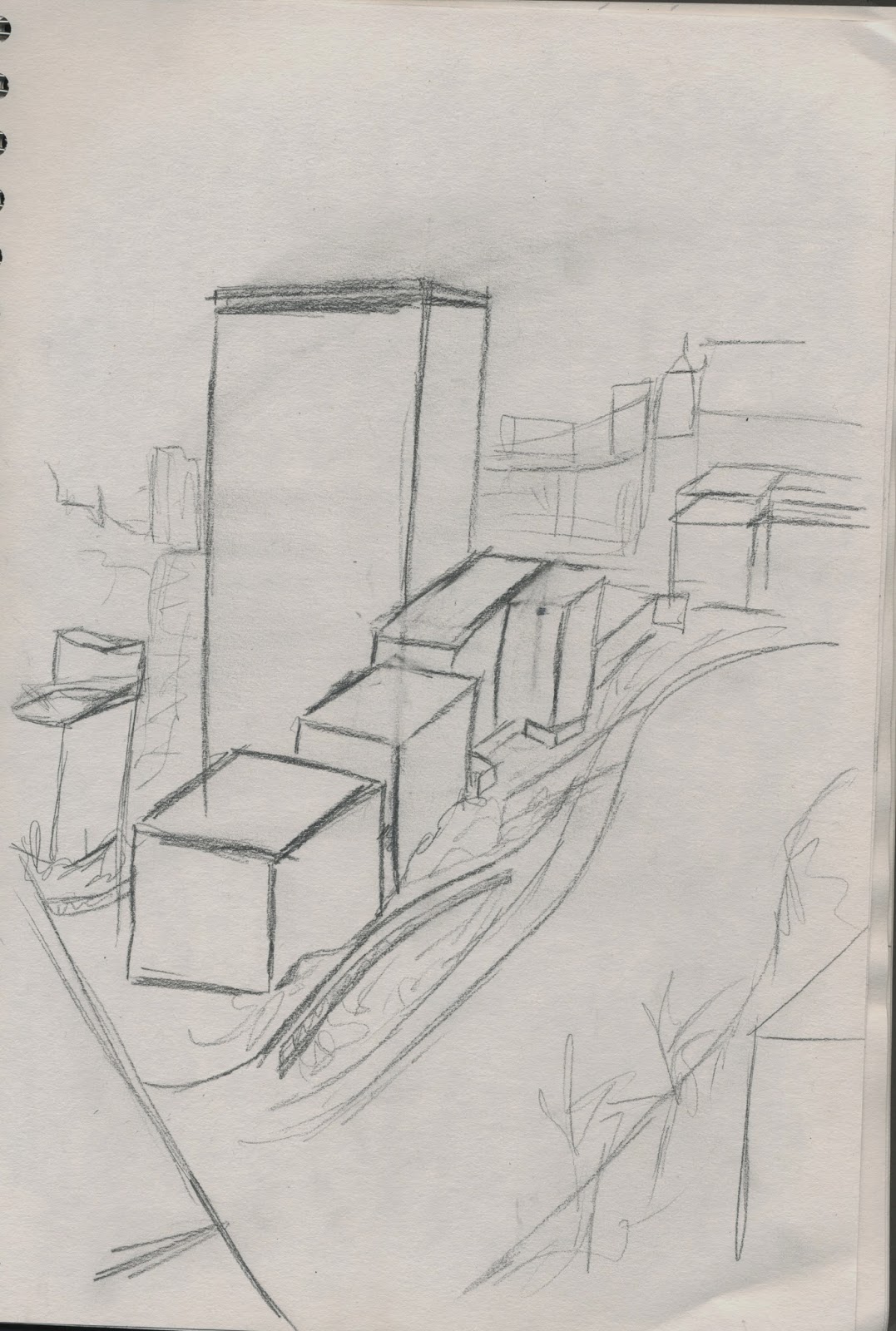
We've been encouraged to use our sketchbooks to just keep drawing all the time. Here are some fun little drawings I've done in my moleskin that I like.


Friday, 14 March 2014

Flow, Form and Force: Some final images.


Rhythm is a dancer. (12 short 10 second poses moving across a space.)


The short 10 second poses task was quite funny to do but at the start I found I was taking too long drawing each pose and running out of time. As the drawings went on, I found a simpler, easier way to draw the figures, with shapes and continuous line.


Like a Puppet on a String. (12 short 10 second poses of squashing and stretching.)

I had the same issue with these drawings in that I kept running out of time,  I also found that, when I tried to draw each pose like the person was staying in the same place, there was quite a cool effect from drawing over the top of each drawing, but it quickly got too confusing and just became a mess of lines. This meant that I went back to drawing across the page.


Ah, Push it! (5-10 minute poses of someone doing a push or pull movement.)


This task I found I could put more detail into the drawings, but I found myself putting too much detail into the first couple and running out of time again. The first of the two images I have posted on here I thought had worked quite well, the proportions and pose seemed right, but it looks like she's boxing instead of pulling a rope, which is what she was supposed to be doing. The second drawing I think worked better.


Strike a pose! (The longer 20-30 minute poses.)


 This was my favourite of the 4 briefs as it meant I could actually get some kind of detail in and spend some time working on the proportions. I think the one at the top worked best and the one at the bottom I found the most challenging because of the angle I was drawing from. 


Overall, I think I enjoyed this project a lot more than I thought I would, as I've never really been a fan of drawing from life, however after this project I think I would like to do more to work on my drawing ability.


Monday, 10 March 2014

Flow, Form and Force


Disney's Snow White uses rotoscoping to get the movements correct in the film. Rotoscoping from a dancer that they got to model is another way to draw from life, getting each and every movement in. This shows the importance of life drawing as it captures the movement really realistically.

Sketchbook.


I did a quick sketch of a figure in my sketchbook. This has helped me work out proportions in the female form.

Friday, 7 March 2014

Flow, Form and Force


When making Sleeping Beauty, Disney used a live action model to capture the movements and make them realistic. This was done by doing really quick sketches as the model moves, similar to our project brief. Above is a video about how they did this and below is the finished movie scene that they were working on. It shows the importance of life drawing in animation.


Wednesday, 5 March 2014

Flow, Form and Force

Ryan Larkin's 'Street Musique' has elements of drawing from life in it, in between morphing these images into other objects. The life drawing elements are well drawn and I really like the way he seemlessly morphs them and changes them. 
The figures in the animation look relatively realistic- the proportions are correct, which would come from drawing from life, although they are simplified to fit with the style of the animation.

Saturday, 1 March 2014

Flow, Form and Force

Thought of You- Ryan Woodward


This animation by Ryan Woodward shows the importance of life drawing and capturing the idea of a persons shape quickly to give the impression of movement.

This animation was done by rotoscoping and obviously has more than a few 10 second poses like our movement brief but it's done with really simple lines and not much detail which helps the movements flow. It's a beautiful animation.

Thursday, 27 February 2014

You Spin Me Right Round - 360 drawing


Here is my 360 degree turnaround of a minion for my "You spin me right round" brief. 

I chose to draw a minion that I got in a happy meal because it is a relatively simple shape and I thought it would be fairly easy to draw, but it also has shapes and parts that extrude and make the shape more complex.

I think this worked well, I don't like how one frame has slightly crumpled paper- I need to take better care of my drawings before scanning them in. I chose to do it in fineliner with limited shading because I like the simplistic approach to the drawing and didn't want to overcomplicate the shading. If I did it again, I'd re-do the hair on the object because it was really hard to make the hair look like it was spinning while it was brushed over, although I think it turned out okay in the end.

Tuesday, 25 February 2014

You Spin Me Right Round (research)

360 degree character turnarounds are used often in animation, not only when designing the characters, but also in the actual animation when characters spin and twirl. The turnarounds allow the viewer to see the character from every angle so the animator needs to be able to draw the character at each stage.

360 degree spins can be seen in many Disney feature films, like here in Cinderella. The turnaround is at the end of the clip where Cinderella is admiring her new dress. The spin looks natural like how someone would actually show off their new dress. I like how the dress moves as she spins.

Friday, 21 February 2014

You Spin Me Right Round (research)


Character turnarounds are used frequently in animation while designing a character to make sure you get an equal amount of detail on the character from every angle. It also allows the animator to adjust shape and size to make sure the proportions are correct. 


Thursday, 13 February 2014

Visual Language- Drawing sounds

Here are my final visualisations of sound presented in animation.


Firework Scream


Monster Blob


Rapid Warble


Fried Egg

Dripping Tap

I definitely preferred animating the sounds to drawing the sounds static, I found it much easier to visualise the sounds moving as it seemed to have more effect and relate more to the sounds in question.

Wednesday, 12 February 2014

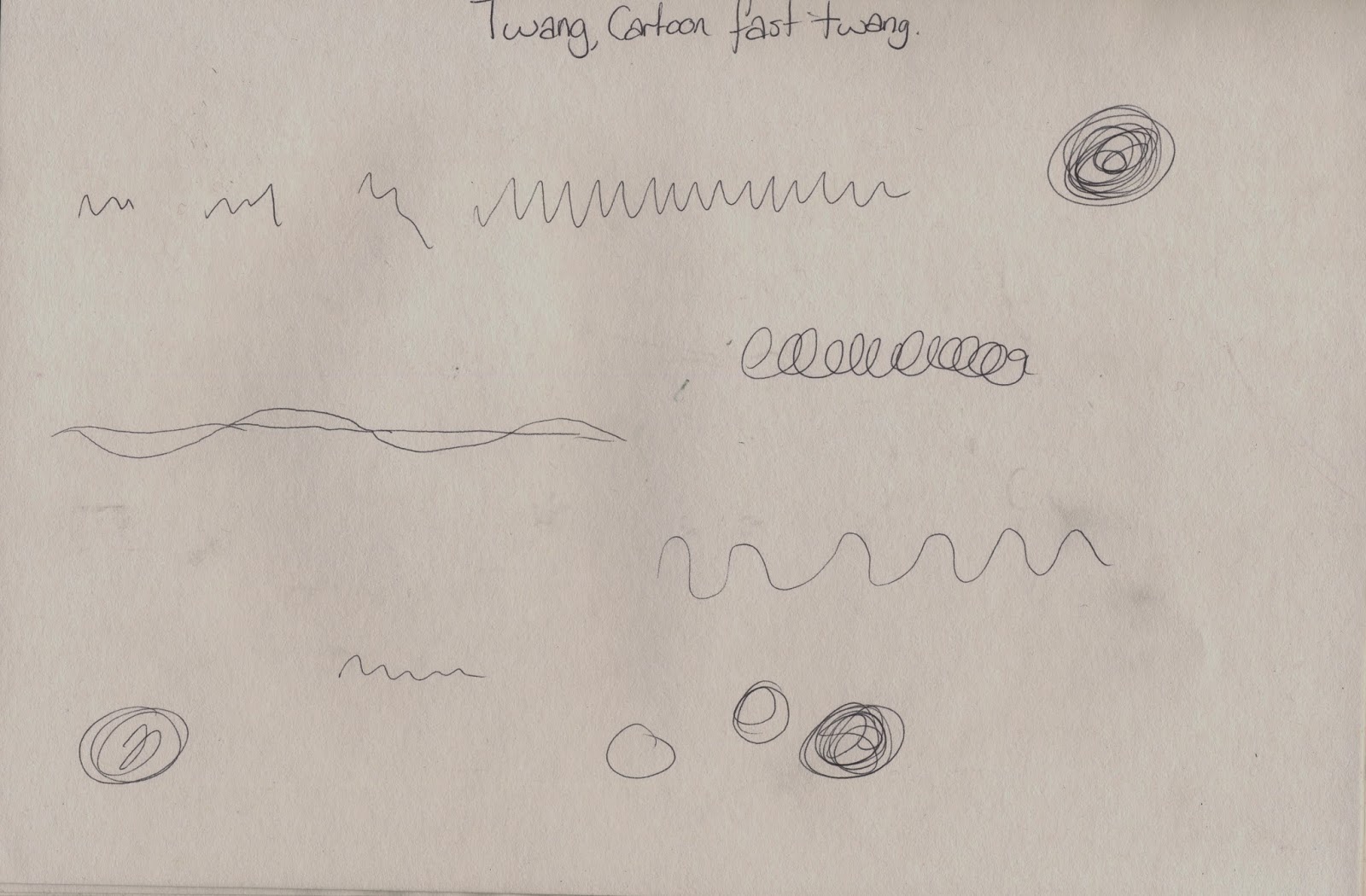
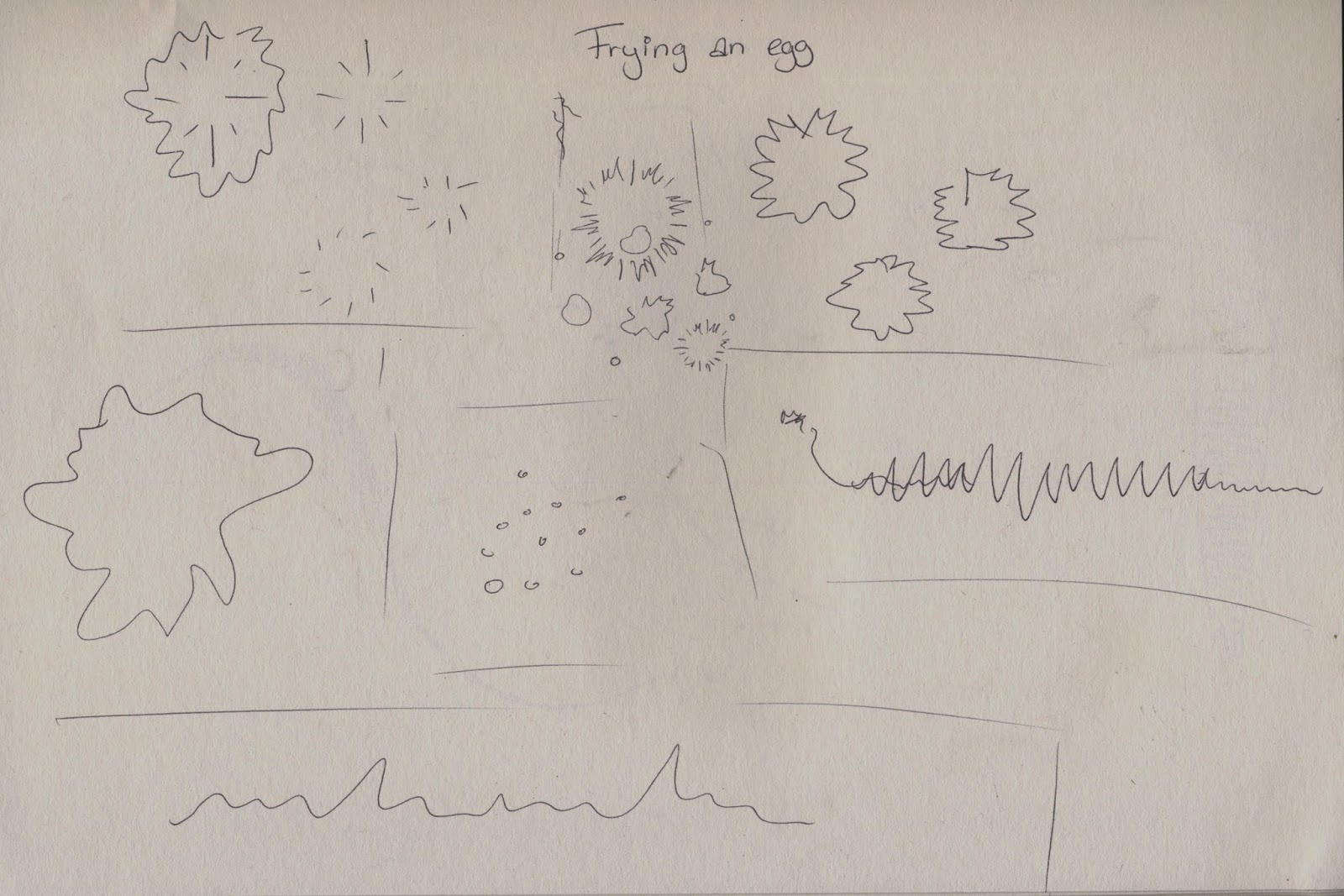
Drawing Sounds


 Here are my Sound Drawings for my 10 sounds, followed by my 5 final drawings. If I'm honest, I really didn't enjoy this project. I found it really hard to draw sounds that change and move as a still image, as I don't think my drawings really represent the sounds that well. I'm hoping my animations of the final 5 represent the sounds a bit better. I would have used more colour in these drawings, but I could not work out which colours looked right in my head with each sound when I was drawing.


(The final 5)


Wednesday, 5 February 2014

Oskar Fischinger- An Optical Poem (1938)


Oskar Fischinger is known for his animations of sounds. This piece starts out with each note starting out as different sized circles depending on their volume, and each fades into the distance, getting smaller, as the note fades and gets replaced by other notes. Different sounds or instruments seem to be represented by different colours and shapes. The strings at the start are circles, whereas later, the woodwind sounding instruments are squares and lines. 

Tuesday, 4 February 2014

The Dot and the Line- A Romance in Lower Mathmatics.

The Dot and the Line is a short animation that tells the story of a line that falls in love with a dot. I like the way the sounds chosen represent each of the shapes, for example the squiggle has a wild and unruly and fun sound, whereas the the line has a smooth sound and the dot has a upbeat bouncy sound. 
This animation is mostly about the story, however moments like with the doorbell, the sound is represented in harsh red lines. And sounds and feelings are embodied in the shape of the line. 

In this animation, I think the parts with the squiggle are the best representations of sound as image.

Monday, 3 February 2014

Disney's Fantasia (1940) Visualising Sounds

Disney's Fantasia is a good example of an artist visualising a sound in animation, using colour and movements to represent sounds.

In the first clip you can see the different shapes that represent each instrument at the start, and it becomes more abstracted as it goes on. The shapes get bigger as the sound gets louder and quicker sweeping sounds are represented by sweeping movements of colour on screen. The really fast part of the song around 4 minutes is shown by many quickly appearing and disappearing dots and beams of light, separated by the loud imposing sounds shown by large imposing images.


Fantasia also has some less abstracted elements to it, as shown here in the dance of the sugar plum fairy. Here, the song is represented by the movements of the fairies dance. When the music sweeps down low, the fairies sweep low and so on. 


Thursday, 9 January 2014

Observe, Explore and Consider- Reflect

I didn't enjoy this project that much,  I liked the drawing, but I felt so awkward sitting out in public drawing with people around watching me..

If I was to re-do this project, I'd probably approach it differently, and sketch quickly on location and then take photos and work into it more later at home. I think that would allow me to get more detail in and it would also mean I could use a lot more different media like paints because I didn't want to drag around paints with me to all the locations.

I also found that drawing on the coach and train was more of a challenge than I'd thought because I forgot to account for the bumps of the road and the lack of space to draw comfortably..


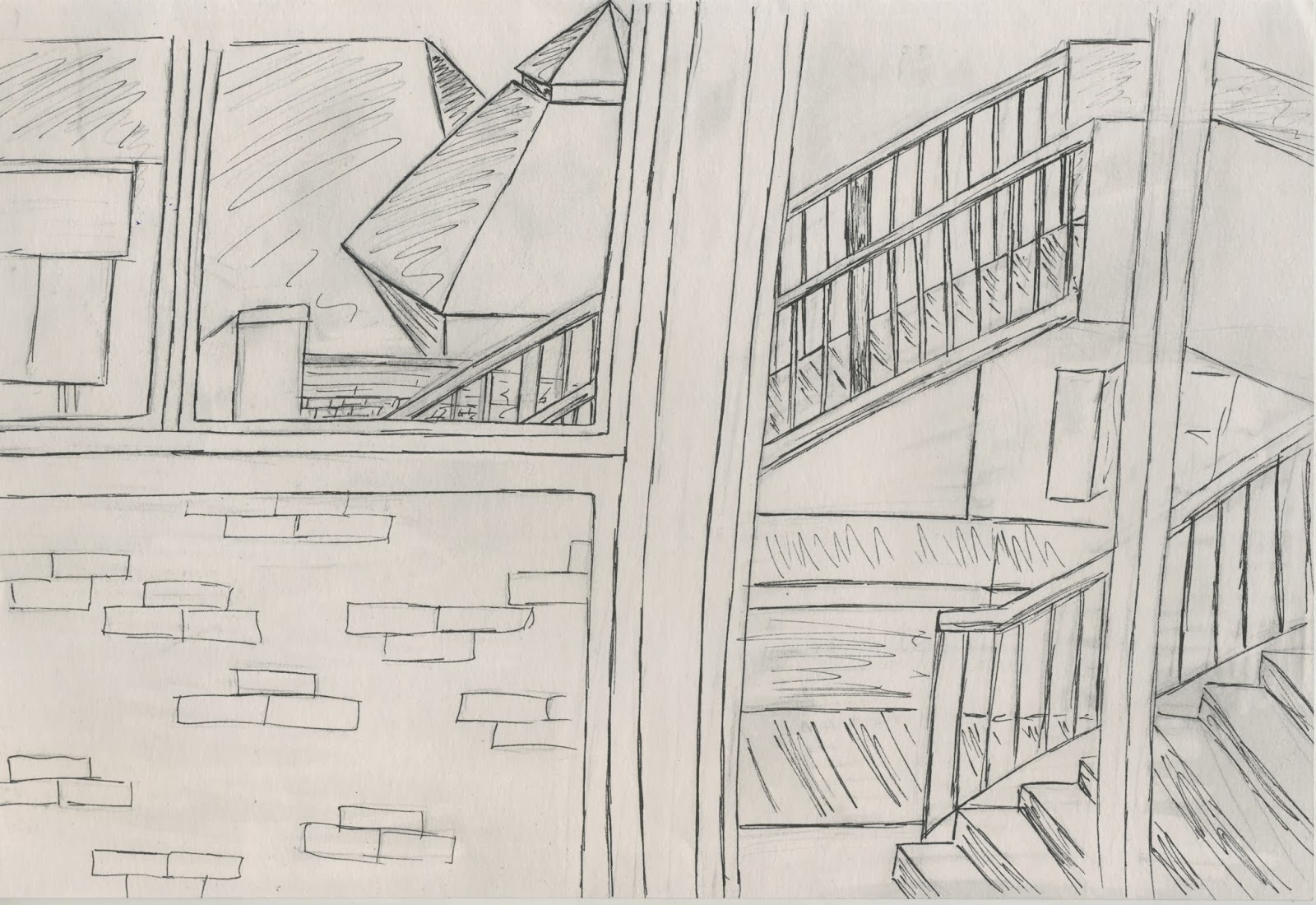
These are my two favourite drawings from the 15, I think they're the most successful. The on on the left was at the train station in the waiting room. I think I got the perspectives quite well in this one, but I would have liked to get more detail in. On the right is the gate to the Alice in Wonderland gardens at Guildford Castle. I like this drawing because I got a nice amount of detail into it, there's a sense of depth in the image and a focus point. 

Wednesday, 8 January 2014

Environmental Storytelling: Finished Drawings

My 15 final drawings the for environmental storytelling brief.


Train/ Bus journey.


Guildford Castle.


 Leeds.


If I were to do this project again, I'd try to take more materials with me to get a wider range of media. I'd also probably do it when the weather wasn't always raining as it meant I couldn't draw outside for long. 
I'm really happy with the way most of the Guildford castle drawings turned out, however I'm less pleased with the way the Leeds drawings turned out as I think they were too rushed as I was running out of time. I need to work on time management!
The Guildford castle drawings are the ones I used the most media on and this also, I think, makes them stand out from the others. I really enjoyed sitting in the castle grounds drawing as it was quiet and no one was watching me draw because no one was there.
The first set of drawings- on the coach and the train, could have turned out better, however it was quite hard to draw on the train/ coach. Because of this, the drawing at the station at the start of my trip turned out better than the others. I also like the one where I added colour as it makes it more interesting and draws your eye to that drawing. 

Tuesday, 7 January 2014

Environmental Storytelling: Up


The art directors at Disney outdid themselves in the movie 'Up'. The lighting and shadows in this movie are so realistic. This movie really shows the importance of observational on location drawing because, although the actual location of Paradise falls in the movie doesn't exist, a team of artists and photographers for Disney went to South America to draw and capture the surroundings and environment of jungles for their fictional world.

In these two images taken from Up, you can see the use of light and shadows and how realistically the shadows fall on the ground. This amount of realism could only be achieved through actual research of the table top mountains and jungles.

 They have also captured realistic rock textures and the texture of the jungle trees from a distance which makes this scene even more believable. 
I also like the way they have put detail into the distance, the way you can see other mountains faded into the horizon, blending into the sky. So much detail has gone into the backgrounds for this movie.


The lighting in this final picture shows paradise falls in the sunset and the shades of pink look natural in this light. 


About Me

My photo
I'm Becky, although I do also answer to my surname- Gilby. I am a 22 year old Animation student at Leeds College of Art, specialising in Stop Motion Animation and Puppet making. I hope to make it into the stop motion industry making puppets.